Compact kitchens present a real challenge: fitting everything you need into a footprint smaller than a closet. A small kitchen table doesn’t have to be a luxury, it’s an essential anchor for meals, assignments, and everyday life. The right space-saving solution lets you eat together without living in a showroom. This guide walks you through the best small kitchen tables, chairs, and setups that actually work for tight quarters. Whether you’re working with a galley kitchen or a studio apartment, you’ll find practical options that fit your space and your lifestyle.
Table of Contents
ToggleKey Takeaways
- A space-saving kitchen table is essential for compact kitchens, transforming cramped eating areas into functional hubs while improving foot traffic and sightlines without dominating the layout.
- Drop-leaf and extendable tables offer the most flexibility in small kitchens—drop-leaf models fold down to just 8-10 inches wide, while extendable tables add 10-12 inches of seating with a center leaf insert.
- Wall-mounted tables are ideal for galley kitchens and one-wall layouts, folding flat against the wall when not in use, but require proper structural support with lag bolts through wall studs.
- Stackable chairs, nesting chairs, and counter-height stools preserve floor space and visual openness better than traditional bulky dining chairs in compact kitchens.
- Storage integration—including tables with shelves, bench seating with drawers, and floating shelves above the dining area—prevents small kitchen tables from becoming clutter magnets.
- Proper clearance measurements are critical: chairs need at least 12 inches of walking space behind them, and the entire setup should allow easy access to appliances and smooth movement through the kitchen.
Why Small Kitchen Tables Are a Game-Changer for Compact Spaces
A small kitchen table is more than just furniture, it’s a functional necessity that transforms how you use your home. In tight spaces, every piece needs to earn its place. Unlike a sprawling dining suite that eats up half the room, a compact table creates a defined eating area without dominating the layout.
The real benefit isn’t just about size: it’s about intentional design. A well-chosen small kitchen table anchors a space, makes meals a social event rather than something rushed at the counter, and often doubles as workspace for kids’ assignments or laptop sessions. When paired with the right chairs, it becomes a versatile zone that works for daily life.
Small spaces also benefit from improved foot traffic and sightlines. A compact table keeps pathways clear to appliances and storage, which means less stubbed toes and a kitchen that feels larger than it actually is. This is especially true for galley-style kitchens where every inch of walkway matters. Investing in a Space Saving Kitchen Table: Unlock More Room with Stylish Functionality means choosing function over excess.
Best Space-Saving Table Styles for Tiny Kitchens
Not all small tables are created equal. The style you choose determines how flexible and functional your setup becomes. Let’s break down the most practical options for compact kitchens.
Drop-Leaf and Folding Tables
Drop-leaf tables are workhorses in small kitchens. The hinged leaves flip down when not in use, reducing the footprint to just a narrow console table, sometimes as slim as 8 to 10 inches wide. When you need dining space, lift the leaves to create a table surface that seats four to six people. This flexibility is why they’ve remained popular for over a century.
Look for solid wood construction or high-quality engineered wood: particleboard leaves tend to sag over time. Standard drop-leaf dimensions run about 36 to 48 inches wide when fully extended and 30 to 36 inches deep. Measure your kitchen before buying, you need clearance to swing the leaves without hitting cabinets or blocking the path to the fridge.
Folding tables offer a similar benefit with an even smaller footprint when stored. Some nest under a counter or hang on a wall bracket. The trade-off: they’re typically less sturdy than drop-leaf options and may wobble if you lean on them. Reserve them for occasional use or lightweight dining.
Wall-Mounted and Extendable Options
Wall-mounted tables are genius for galley kitchens or one-wall layouts. They fold flat against the wall when not in use, perfect if you have a narrow kitchen where traditional seating steals precious floor space. Many models include a fold-down leg or bracket system that supports the tabletop and prevents warping. Expect to mount them at standard counter height (36 inches) or slightly higher for bar-style seating.
Before installation, locate wall studs with a stud finder and use lag bolts or heavy-duty anchors rated for the weight of your table plus occupants. Drywall anchors alone won’t hold a loaded table, you need structural support. Mount the table so it doesn’t interfere with light switches, outlets, or cabinet doors.
Extendable tables with a central leaf insert give you the best of both worlds. The leaf stores under the tabletop or nearby: you pull the table halves apart, insert it, and suddenly you’ve added 10 to 12 inches of seating. Unlike drop-leaf designs, the entire surface remains level and stable. Modern versions use smooth sliding mechanisms that don’t require heavy lifting. These work especially well in open-concept spaces where you want flexibility without visual clutter. Explore Space-Saving Furniture for Small Apartments for more integrated solutions.
Choosing the Right Chairs to Maximize Your Kitchen
The chairs matter just as much as the table. A bulky, high-backed dining chair will make a small kitchen feel cramped: a sleek, lightweight option preserves the sense of space. Here’s what to prioritize.
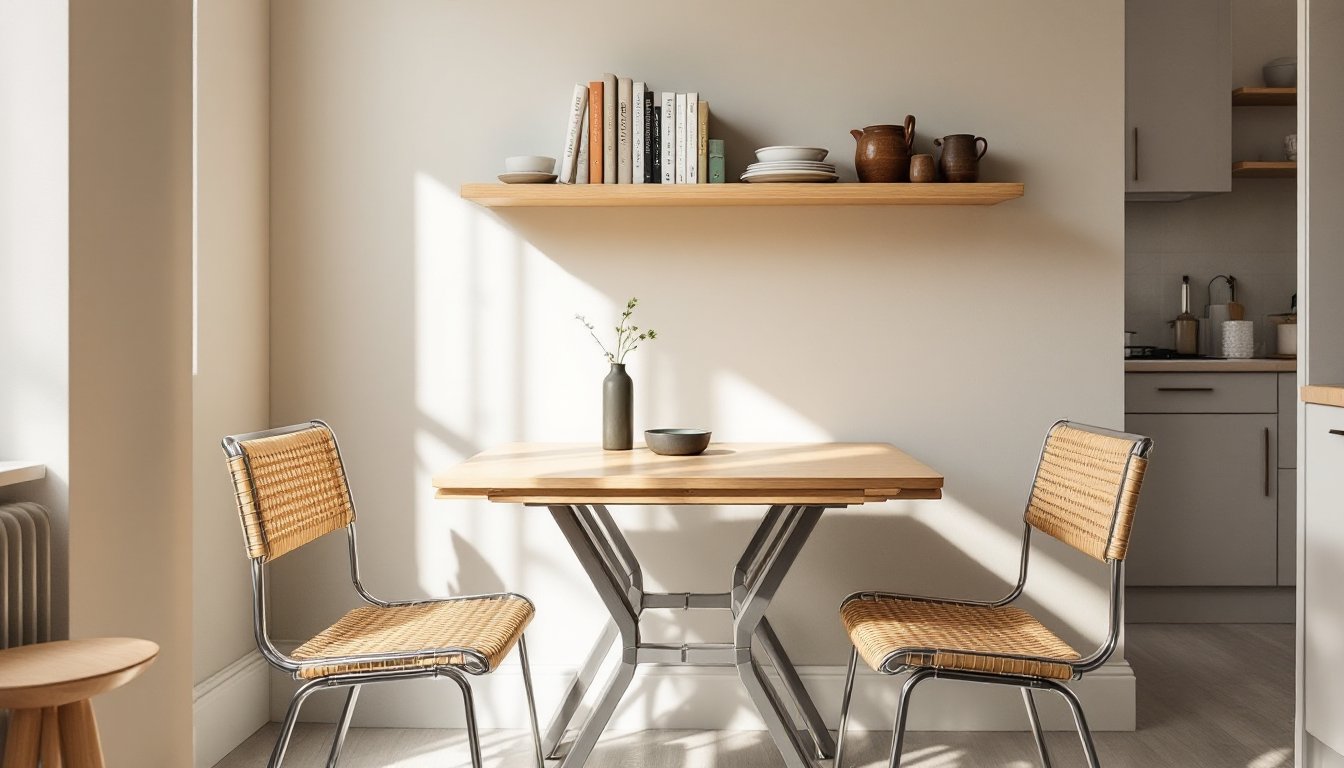
Stackable or nesting chairs are ideal for compact kitchens. They stack vertically or nest inside one another, so you can tuck them into a corner, under the table, or behind a door. Look for lightweight materials like metal frames with woven seats or molded plastic shells, they’re easy to move and durable. Many stackable designs are also surprisingly comfortable, even though their minimalist look.
Counter-height stools work great with wall-mounted or bar-height tables. They take up less visual space than traditional chairs and create a casual, café-style vibe. Choose stools with a 24 to 26-inch seat height for standard bar tables (36 inches tall) or 30 to 32 inches for higher counters. A footrest at the right height prevents your legs from dangling uncomfortably during a long meal.
Folding chairs are the backup plan for guests. Modern versions don’t look like camping equipment, fabric-covered frames and wood slats give them a polished appearance. Store them flat or hang them on wall pegs when not needed. Just avoid cheap versions that wobble or creak: invest in mid-range options with reinforced joints.
Whatever style you choose, test the clearance. Chairs should leave at least 12 inches of walking space behind them when pushed in, and you should be able to slide in and out without scraping the wall or appliances. A low-backed or armless design gives you more flexibility in tight layouts. Check resources like The Kitchn for detailed kitchen layout ideas.
Smart Storage Solutions Integrated With Your Dining Setup
In a small kitchen, your table and chairs can do double duty, especially if storage is built in or cleverly integrated. This is where smart design prevents your dining area from becoming a clutter magnet.
Tables with shelves or cubbies underneath are goldmines for small spaces. These open shelves hold cookbooks, linens, or small appliances you use regularly, keeping your counters clearer. Make sure items are organized and attractive: open storage only works if it doesn’t look chaotic. Baskets or bins help contain smaller items and maintain a tidy appearance.
Bench seating with storage underneath is another excellent choice. A long bench with a hinged lid or drawers slides under the table and provides a home for placemats, napkins, or rarely-used kitchen gadgets. The solid surface also makes cleaning easier, fewer chair legs to work around. Benches are also more forgiving in a tight space because they don’t stick out as far as individual chairs.
Don’t overlook wall space above or beside your table. Floating shelves or pegboards mounted at table height provide storage without eating floor space. Display attractive dishes, glassware, or cookbooks to make the area feel intentional, not cramped. Many compact kitchens also benefit from Space Saving Kitchen Appliances paired with an efficient dining setup.
If your table is a folding or wall-mounted model, choose a spot that doesn’t block access to that wall for storage installation. The goal is to create a zone that’s both functional and organized, eating and storing in the same footprint.
Conclusion
A small kitchen table paired with smart chair choices and integrated storage transforms a cramped eating space into a functional hub. Drop-leaf and extendable tables offer flexibility when you need it: wall-mounted options disappear when you don’t. Stackable chairs and stools keep the floor clear. Build storage into your setup, measure twice, and don’t skimp on assembly hardware. Your small kitchen won’t feel small when every piece earns its place and your dining setup actually fits your life.